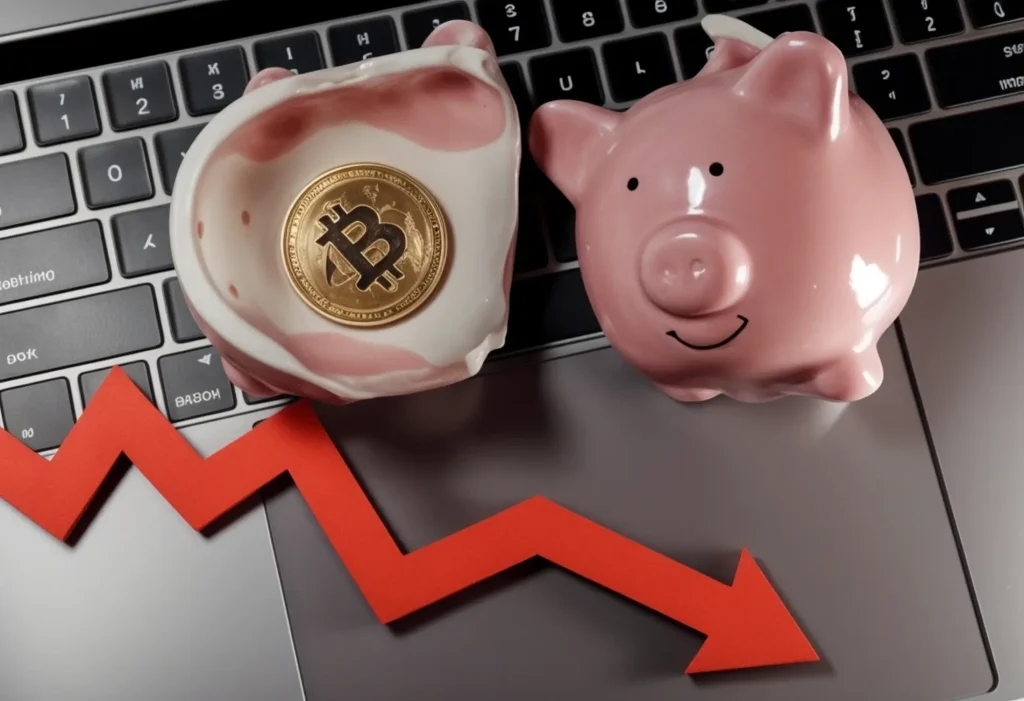
As we face an increasingly unpredictable economic climate, understanding the future of Bitcoin becomes crucial. Investors are leveraging Bitcoin to safeguard their assets and navigate the turbulence of financial markets, providing insights into crypto investment strategies.
Economic Climate Driving Bitcoin Adoption
The global economy is currently undergoing significant changes, pushing many investors to seek alternative investments like Bitcoin. With rising inflation and persistent market volatility, Bitcoin is being considered as a viable hedge against financial uncertainty. This shift is not just theoretical; real-life examples abound of investors re-evaluating their portfolios to include Bitcoin assets. For instance, amid the recent job market fluctuations in the U.S., where the economy lost 92,000 jobs in February, as indicated by the Bureau of Labor Statistics, many are turning to cryptocurrencies as a response to economic strain. With rising oil prices and unfolding economic evaluations, the motivation to invest in Bitcoin has never been stronger, stabilizing what many view as a tumultuous financial landscape, as noted in recent reports.
Bitcoin Role in Portfolio Diversification
Bitcoin serves as a non-correlated asset, providing a unique opportunity for investors to diversify their portfolios. Its performance during economic downturns often differs significantly from that of traditional assets like stocks or bonds. This valuable characteristic means that when the stock market dips, Bitcoin may not follow the same trajectory. For example, during economic crises, Bitcoin has sometimes acted independently, offering investors a pathway to mitigate overall risk. Incorporating Bitcoin into a diversified investment strategy can be approached in several ways:
– Allocating a percentage of your portfolio to Bitcoin: This can help in balancing risks.
– Regular rebalancing: As Bitcoin prices fluctuate, maintaining your desired allocation can safeguard against overexposure.
– Combining with stablecoins: Using stablecoins alongside Bitcoin can further reduce volatility risks.
By understanding how Bitcoin complements traditional investments, investors can better position themselves for potential market changes.
Current Bitcoin Market Analysis Trends
Analyzing Bitcoin’s market trends reveals its resilience amidst economic fluctuations. Recently, reports indicated that Bitcoin continues to trade under pressure, with fluctuations primarily driven by economic data and market sentiment. Observing shifts in trading volumes can provide valuable insights; when economic news breaks, Bitcoin often sees a spike in trading activity as investors react swiftly. Following job loss reports, for instance, financial markets rapidly assessed the potential impact on interest policies held by the Federal Reserve, which could indirectly influence Bitcoin investments positively or negatively, as implied by market analyses.
Financial Forecasts for Bitcoin in 2026
Looking ahead, various economic variables are expected to shape Bitcoin’s trajectory by 2026. Current financial forecasts indicate that if inflation persists and traditional assets continue to underperform, Bitcoin could see increased adoption as a key alternative investment. Expert opinions highlight that potential interest rate reductions by the Federal Reserve, in light of rising unemployment rates, may create a more favorable environment for Bitcoin to thrive. By analyzing current economic forecasts, potential investors can anticipate shifts that may present lucrative opportunities within the crypto space. Thus, for investors eyeing the future, understanding these dynamics can aid in informed decision-making.
Strategies for Crypto Investment During Economic Uncertainty
For investors looking to leverage Bitcoin during these turbulent times, employing well-thought-out strategies is crucial. Here are actionable steps to consider:
– Conduct thorough market research: Understanding market movements ensures better investment timing.
– Assess risk levels: Determine how much volatility you can withstand before investing in Bitcoin.
– Stay updated on regulations: Regulatory landscapes are constantly changing, impacting cryptocurrency values.
Tools like market analytics platforms can offer real-time insights into pricing trends, making them invaluable for crypto investors. Engaging with informational content from industry experts can also equip investors with a broader understanding of the market landscape.
The Future of Bitcoin Amidst Changing Regulations
Regulatory challenges represent a significant factor affecting Bitcoin’s future in finance. As global policies evolve, they can create both opportunities and obstacles for investors in Bitcoin. For instance, understanding how legislation surrounding cryptocurrency trading might influence market dynamics is essential for anyone looking to invest. Proactive investors can navigate these regulations by staying informed and agile, adapting their strategies to comply with emerging legal frameworks. This approach can lead to a more secure and profitable investment journey as the landscape continues to shift.
In summary, the future of Bitcoin is intertwined with various economic and regulatory elements, making it essential for investors to stay informed. Embracing Bitcoin and its potential offers a unique way to navigate an increasingly volatile economic climate.





More Stories
Why AI Trading Bots Are About to Change Everything in Crypto Investment
The Hidden Truth About Crypto Scams and Market Downturns
Why Ethereum’s $1 Billion Surge Is a Game Changer for Investors